2013
I’m Just Fat: A Statement About Bodies is a body of work created in partial fulfillment of requirements for my BFA Thesis, and a physical manifestation and creative response to my investigation of how groups and categories of people are placed into hierarchies, and how they create what I call a “denial to the experience of a happy life” and conceptualize ways in which it manifests in social interactions. Specifically, I focus on the hierarchies placed around the comparison of fat bodies versus thin bodies.
First, I examined the different conclusions that are commonly drawn when the general public sees a fat person, the frequent (and often unsolicited) commentary and criticism that accompanies it, and also shame, which became a prevalent companion topic. With these, I began researching different essays and writings that cover the topic of shame, the body, desire, and what it means to experience a happy life. The result was a narrative that specifically investigated how certain bodies are circulated as good and others as anomalies, why, and how the criticism that accompanies it acts as a philosophical loss of autonomy.
The work leans on multiple essays that inspired the overall narrative, but there are three which were most influential. In Sara Ahmed’s essay Happy Objects, she analyzes Affect Theory and how happiness functions as a link to direct individuals towards certain objects and circulate them as social goods (here I replace “objects” with “aesthetics” for the purpose of this work). Through being imbued with positive affect, she writes these objects become markers perceived as necessary for a good life, but also how the taste towards the “good objects” is shaped by what is already decided to be good socially. Judith Butler’s essay Precarious Life: The Powers of Mourning and Violence asks the question of whose lives counts as human, and what makes for a grievable life, which I connected to negative connotations that are prevalent from a culture that criticizes being fat or having fat on the body. Through this essay I concluded this criticism claims to be rooted in concerns on overall health, but I argue that over time, fat has become demonized to the point of bordering on a phobia of fatness. In this phobia, it almost develops a sense of authority of who is living a “grievable life”, or rather who is living their life to the fullest and happiest just by how they look.
This follows into the third essay, which is Susie Linfield’s The Cruel Radiance: Photography and Political Violence, wherein she describes three things that define human rights (right to safety, dignity, and freedom) and how the original goal of creating these rights (to build a kind of “species solidarity”) falls short of this goal because people who embody the reality of being stripped of these rights also embody a separation from humanity. I found this to be a reflection of the narrative I was building because anytime a standard is created, it creates a situation where exclusion is possible like the binary of fat (not acceptable) and thin (more acceptable). I created a parallel to these rights around the topic of fatness by thinking of safety as an assumption that fat always puts one at risk for their health, thinking of freedom to lessened or lack of mobility, and thinking of dignity to the assumption that to be fat is to be gluttonous and self-indulgent. Together, these essays allowed me to create a narrative and goal for the work (the what) and inspired the visual metaphor I wanted to achieve that goal (the how).
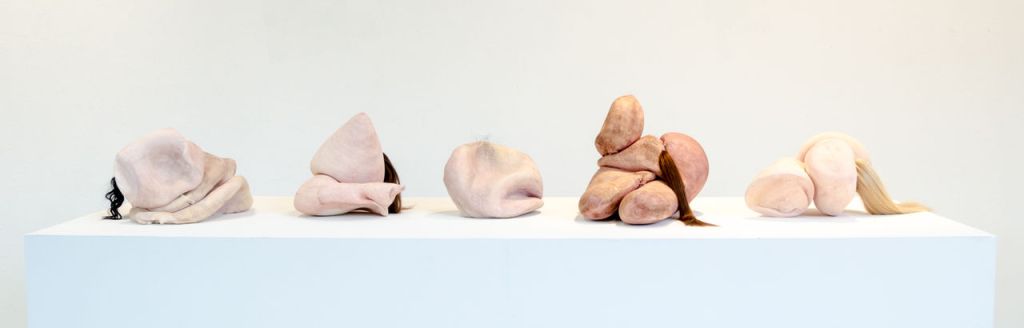
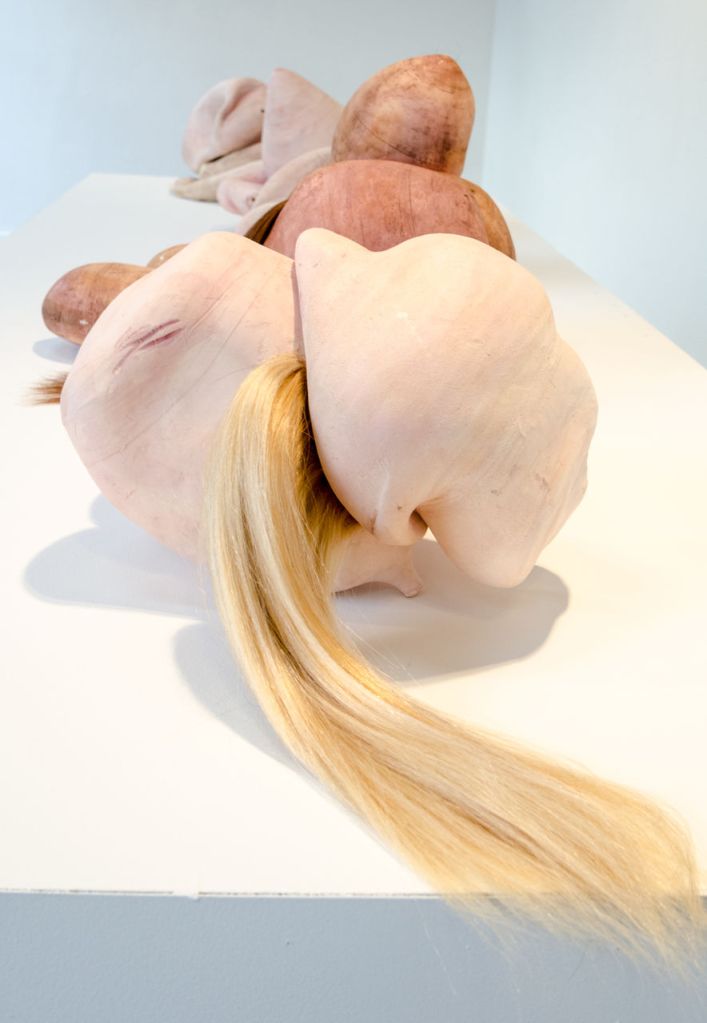
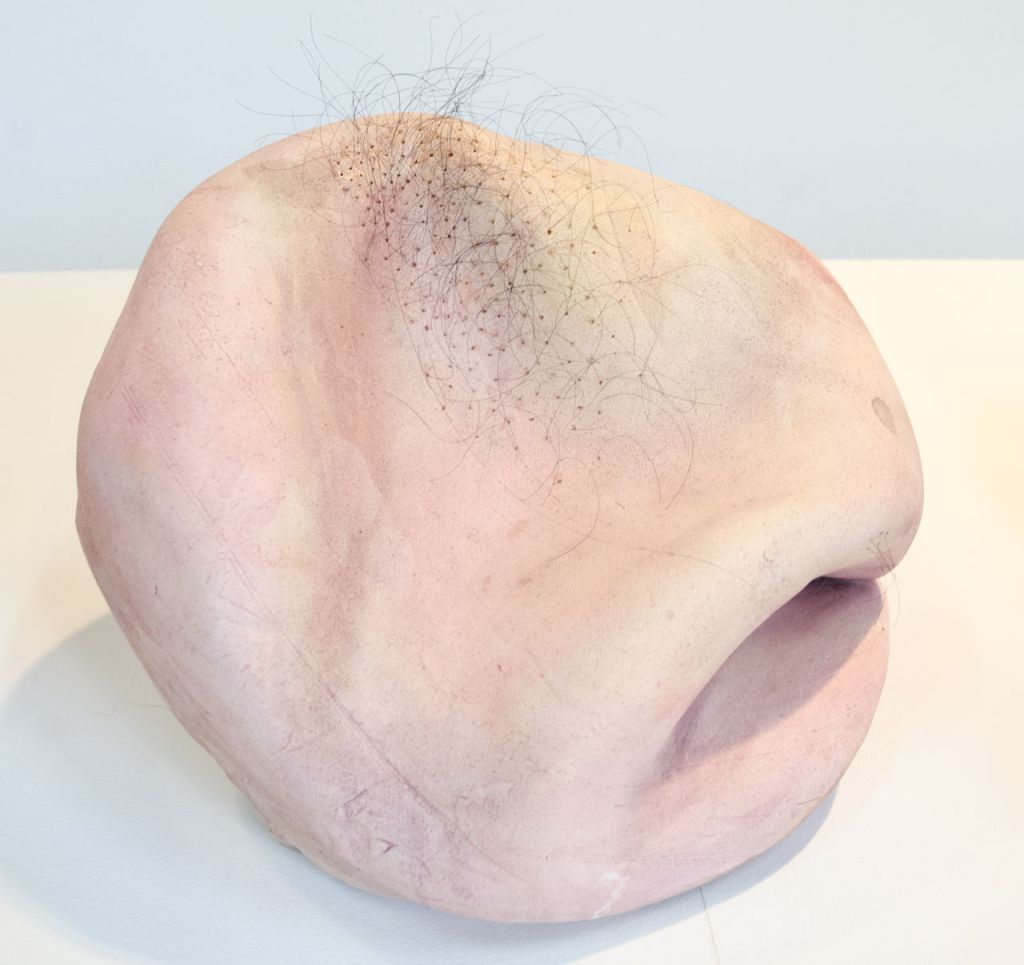
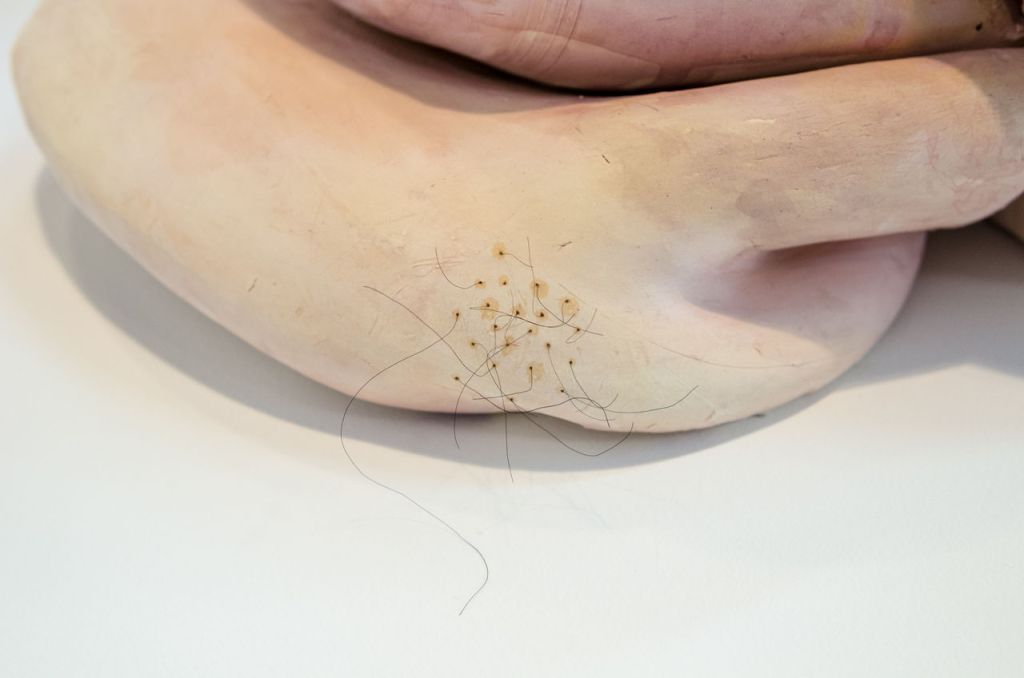
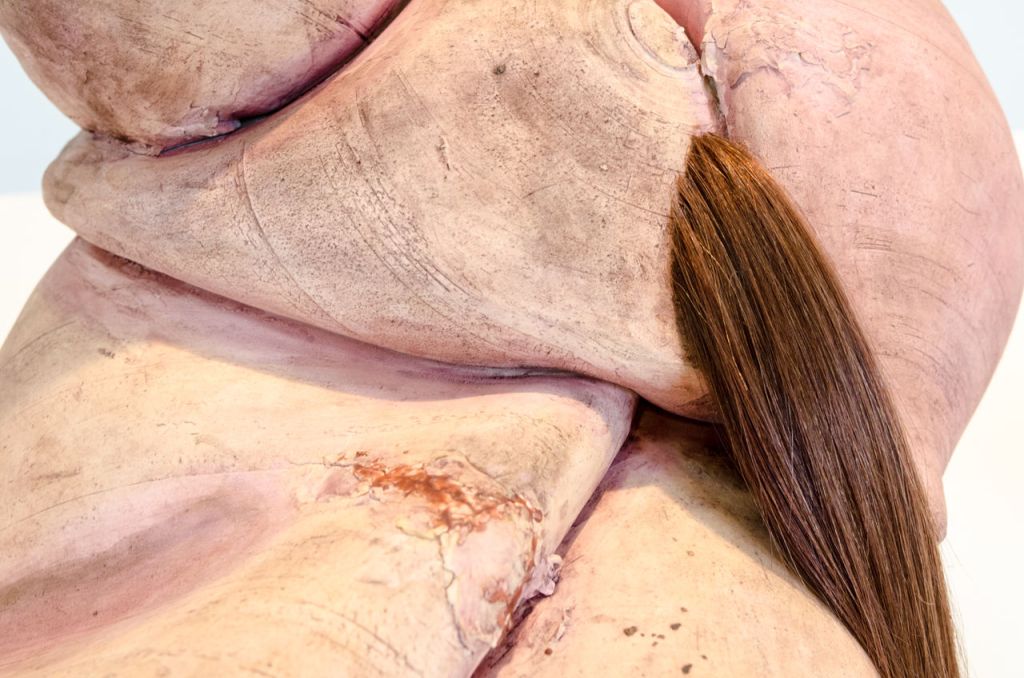
I originally was fascinated with throwing large round forms to represent roundness as “fat”, but it fell short of the natural sags and folds found on the body. This led me to dropping the round forms into piles on top of each other to allow gravity to create naturally sagging shapes. I created about five of these forms, then single fired them at low temperature before watercoloring them with different skin tones and adding hair. Some hairs were in long luscious locks, some were individually applied as curly back hair, leg hair, etc. Attempts were made to create various skin tones and hair types for diversity. The materiality choices were meant to create abstract forms that utilized shapes often found with fat bodies, while not losing the tie to the human body.
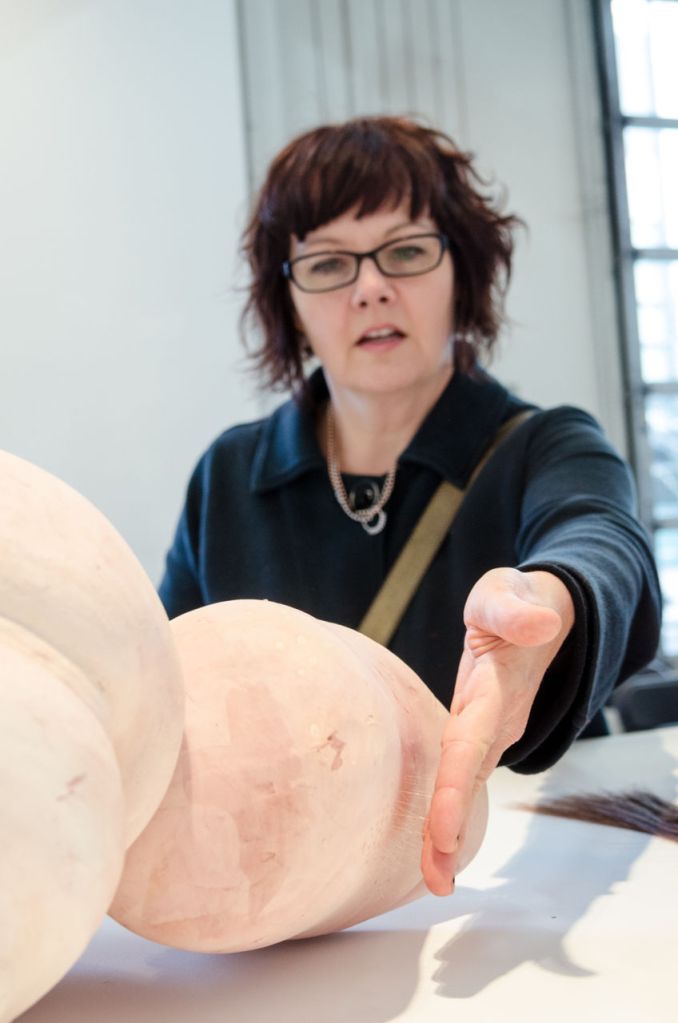
I learned early on that there is an inherent desire to touch and explore the piece itself and this became an important inspiration behind allowing the audience to touch the works. By placing the works on display in a group and allowing the audience to indulge with this impulse/desire, this simultaneously explores the idea of desire for these shapes that mirror fat bodies while emphasizing the normalcy of this aesthetic and the inherent desire we reject via social norms.
This work existed for over 10 years and was exhibited in part of my thesis presentation as part of the fulfillment for my BFA in Sculpture. It was also included in the BFA Thesis Show at PNCA where it won the Best in Show Thesis Award for the Sculpture Department at PNCA for the 2013-2014 graduating class. After that, it was exhibited in full one more time at Welcoming at Umpqua Valley Arts. In 2025 it was broken down into a documentation piece to be displayed with select images of the work alongside hair salvaged from the works.

